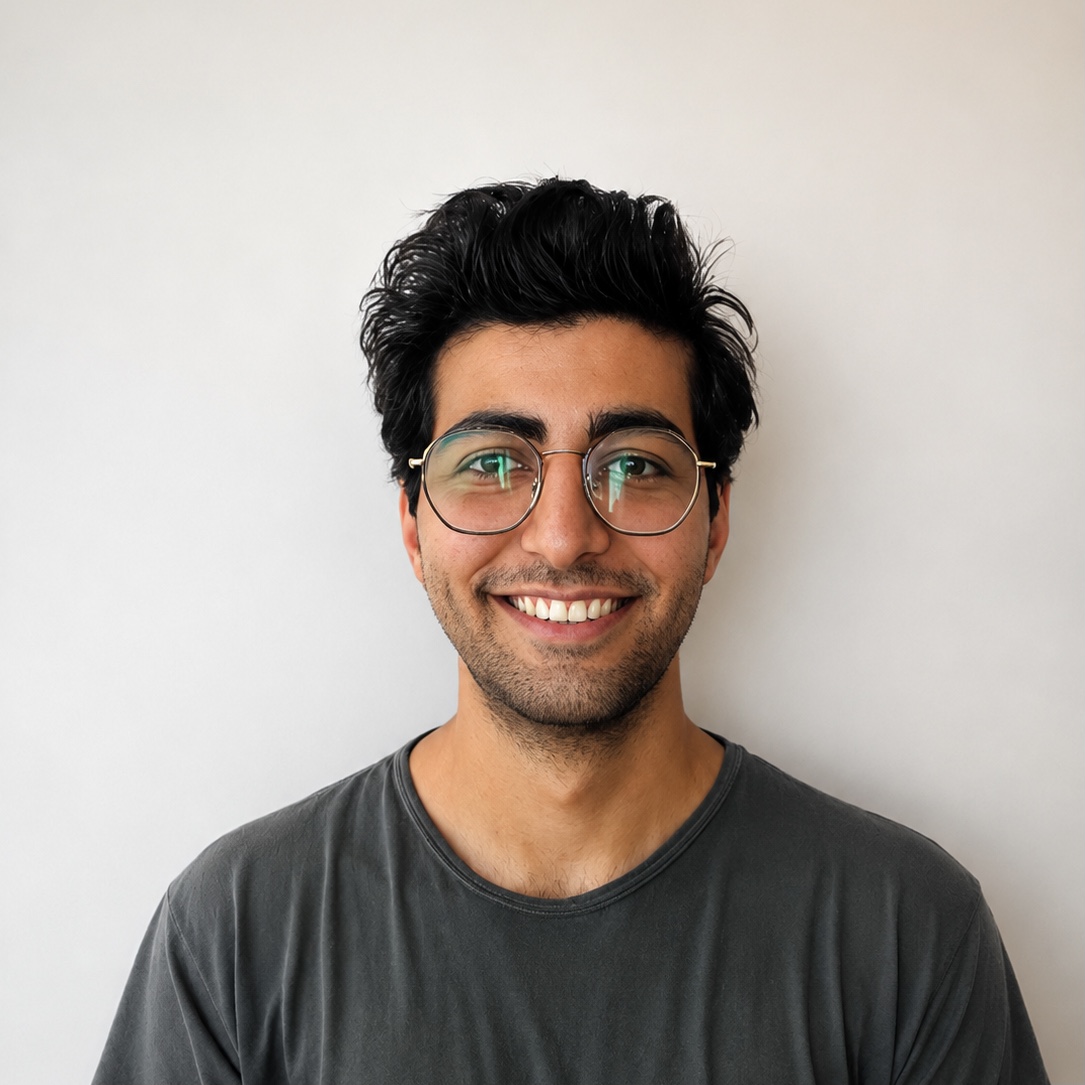
Ali Ahmadi Roghabadi
My research lies between computational neuroscience and continual learning, and my interest is developing systems that can learn and adapt over time. I am particularly interested in applying these ideas to robotics and large language models. Outside of research, I take part in competitive programming contests on Codeforces, and I enjoy the process of problem solving.
I completed my bachelor's degree from University of Tehran, where I did my undergraduate project under the supervision of Dr. Hossein Aghababa. Also, in the last two years of my bachelor's degree, I worked as a research assistant in the Deep Learning Lab under the supervision of Dr. Kazem Fouladi. During this time, I attended the 6th International Conference on Pattern Recognition and Image Analysis (IPRIA 2023) at the University of Tehran.
About
Research Interests
- Computational Neuroscience
- Continual Learning
- Deep Learning
Education
Research Experience
Teaching Experience
Projects
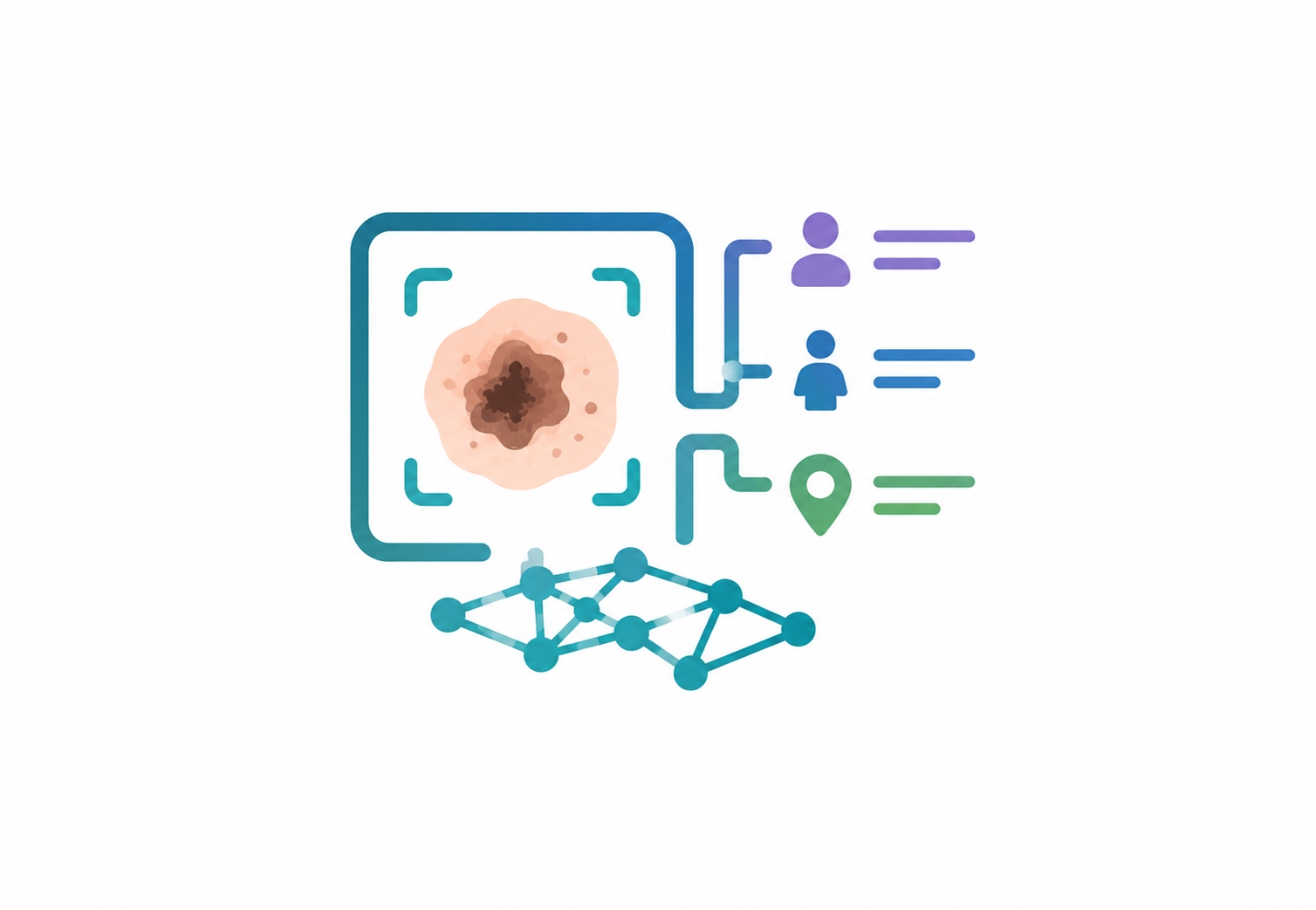
Skin Lesion Classification — This project is a lightweight, multi-modal deep learning model that classifies skin lesions from images into seven diagnostic categories from the HAM10000 dataset — melanoma, melanocytic nevi, basal cell carcinoma, actinic keratoses/Bowen's disease, benign keratosis-like lesions, dermatofibroma, and vascular lesions — while also taking the patient's age, sex, and lesion body location as additional inputs to make more clinically informed predictions than an image-only model. Built on a MobileNetV3 backbone, the model is designed with a deliberate focus on accuracy and efficiency alongside small resource usage rather than raw benchmark performance alone, making it lightweight enough to embed directly into mobile apps and run inference on-device, without depending on a server or cloud API for every prediction.
LIF Neuron Simulation — Implementation and simulation of a single leaky integrate-and-fire (LIF) neuron, one of the simplest and most widely used models in computational neuroscience for approximating how a biological neuron behaves. The neuron's membrane potential is modeled as it integrates incoming input current over time while also "leaking" charge back toward a resting state, mimicking the passive electrical properties of a real neuron's membrane. once the membrane potential crosses a defined threshold, the model generates a spike and resets the potential, reproducing the basic firing behavior seen in real neurons. The project visualizes this membrane potential dynamics and spike generation over time.

Whisper Fine-tuning — Fine-tuned OpenAI's Whisper model on Persian speech datasets to enhance automatic speech recognition (ASR) performance. This project was conducted at the Deep Learning Lab, University of Tehran.
More on github.com/0ahmadi
Quotes
-
There is no goodness waiting for us, no destiny guiding us. The creator has abandoned humanity. The cruelest burden is not this reality itself, but our refusal to accept it. Humans are masters of self-deception.
— Unknown -
Ignorance more frequently begets confidence than does knowledge.
— Charles Darwin